Product Design · SAP
Redefining the Developer Experience for Commerce: Real-Time Extensibility
An overview of my work at SAP across Commerce Extensibility, Storefront, and Customer Service.
Product Design · SAP
An overview of my work at SAP across Commerce Extensibility, Storefront, and Customer Service.
In the fast-paced world of commerce, businesses demand agile solutions that can adapt to evolving needs and technologies. Traditional commerce platforms struggle to accommodate custom functionality and real-time integrations, creating significant business challenges. This case study reflects how I approach designing a developer experience that helps businesses adapt and extend functionality to ever-changing market needs, as part of my broader work across SAP's commerce ecosystem.
The design of core commerce extensibility features, specifically the Synchronous/Asynchronous Extension Frameworks, the Data Mapper micro-front-end, and Condition Filters, was critical in simplifying the development process for partners and enabling client businesses to integrate external systems seamlessly and adapt to market changes in real time. This resulted in a 94% System Usability Score and a 50% increase in flexibility and customization options for users.
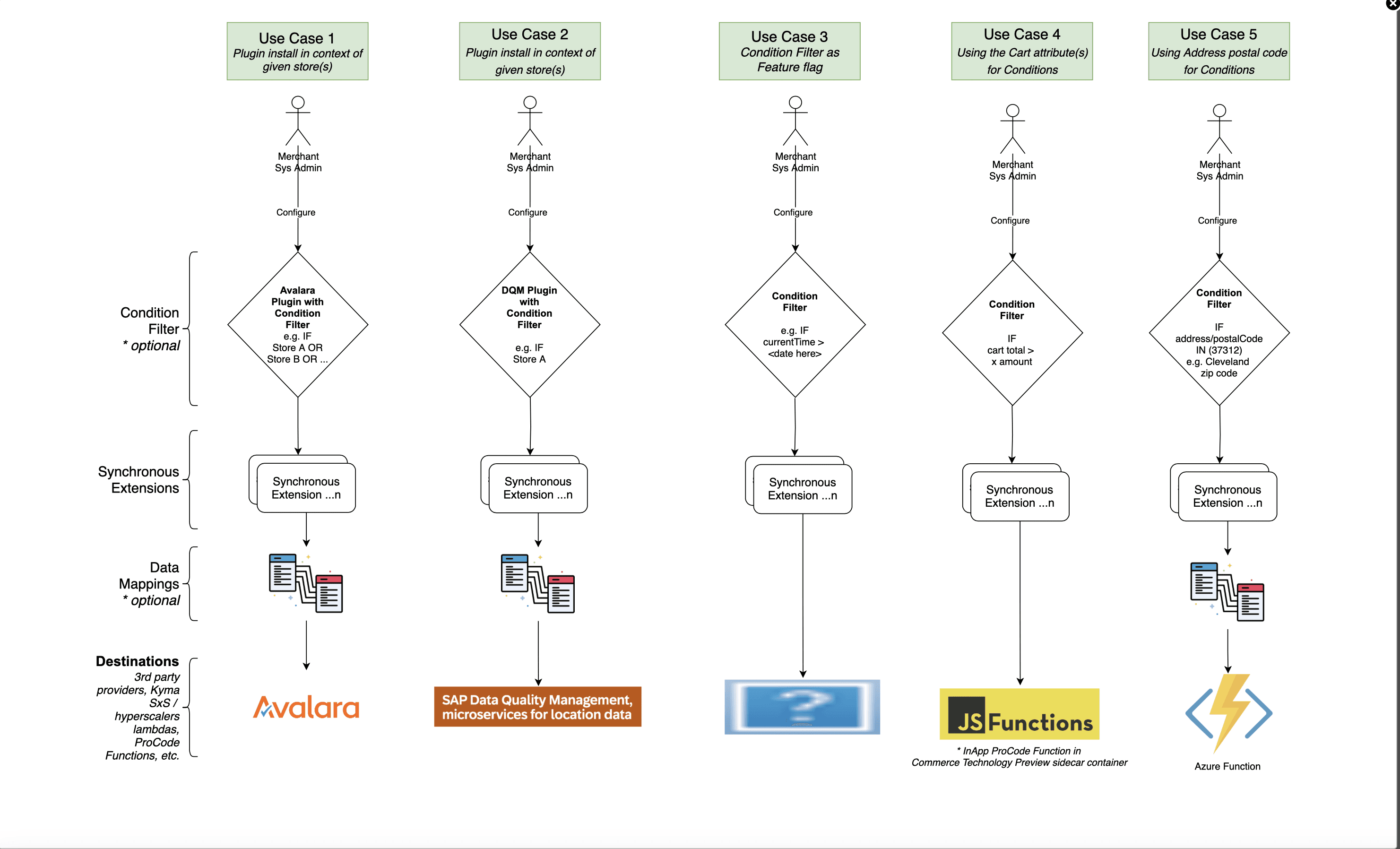
The goal was to help customers create extension points at runtime that let them execute business logic synchronously based on predefined extension points, such as cart calculation, before/after actions, add-to-cart, or payment method modification, alongside supporting functionality like integration testing and data mapping.
I focused on modernizing the developer experience within a composable commerce ecosystem. The core challenge involved overcoming the limitations of rigid, traditional platforms, specifically architectural inflexibility, limited customization, and cumbersome third-party integrations, to enable real-time market adaptation. While collaborating with other designers, I directly led UX design for critical features such as Data Mapper, Condition Filter, and Integration Testing.
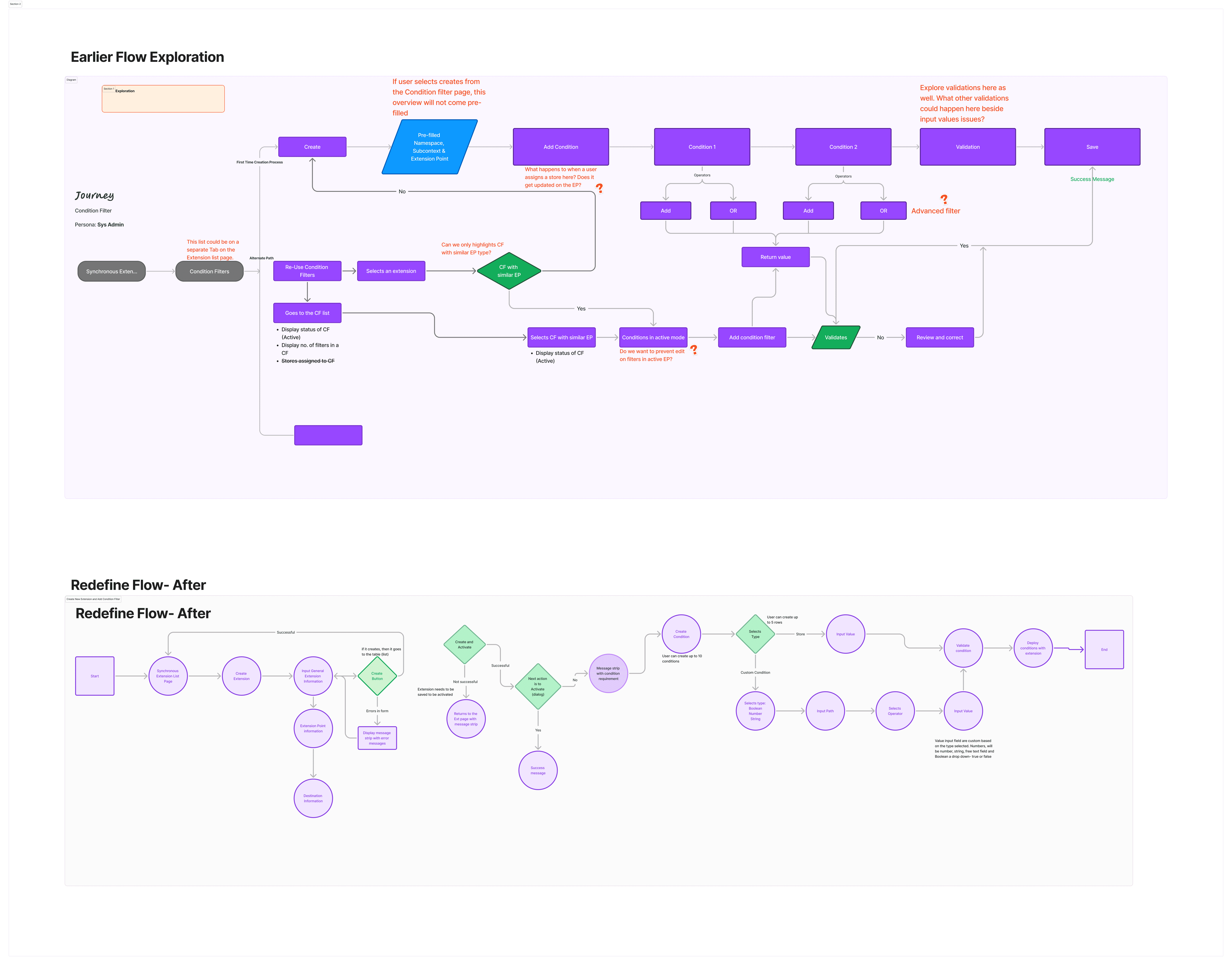
Discovery & Alignment
User interviews, surveys, and in-app analytics to understand pain points and needs, plus a study of competitor apps and industry trends.
Explore & Insights
Dedicated qualitative and quantitative research to validate assumptions and uncover strategic opportunities and true pain points.
Prototyping & Accessibility
Confirmed insights translated into high-fidelity, interactive solutions with a non-negotiable focus on accessibility standards and fully annotated developer handoff.
Validation & Support
Design effectiveness measured against KPIs using A/B testing and moderated/unmoderated user tests, with continuous support through launch.
My work at SAP spans beyond the developer experience above. Two examples I can name, though the detailed designs remain under NDA:
If you'd like to know more about either of these, or about my broader work at SAP, reach out — I'm happy to talk through the scope and impact in more detail.
These projects were a significant opportunity for professional growth, particularly in balancing strategic UX leadership with technical product knowledge. While my initial grasp of the comprehensive product architecture was limited, proactive collaboration with a strong product team was invaluable, directly improving the product's flow and overall user experience.
Crucially, this work expanded my ability to identify and champion accessibility concerns early in the design process. It also underscored the importance of a strong support network: despite a temporary organizational restructuring, vital assistance from the UX design team, the design system team, and the accessibility team ensured that project goals and business objectives were consistently met.
“Veronica is an exceptional communicator; she approaches new challenges with enthusiasm and a can-do attitude that is truly inspiring. I have particularly appreciated her insightful feedback during discovery phases of new concepts & ideas; her perspective always helps to refine and elevate our thinking. Beyond her impressive design skills, Veronica is a true champion for everyone around her.”
Sebastien Aurusse — Technical Product Manager, SAP Canada