1. 1The challenge
  2. 2Discovery
  3. 3Journey map
  4. 4Four audiences
  5. 5The big call
  6. 6Recommendations
  7. 7Obstacles
  8. 8Impact
  9. 9Reflection
UX Research · Service Design · Kinarm

Support that grows with a NeuroRobotics Lab.

How I re-imagined the way a neurorobotics research company supports its users and community, before a single screen of Kinarm Academy was built.

RoleLead UX Researcher · Service Designer
Duration3 months · 2021
ToolsFigma · Miro · Surveys · Office
43%
projected rise in 2021 support volume
4
target audience profiles
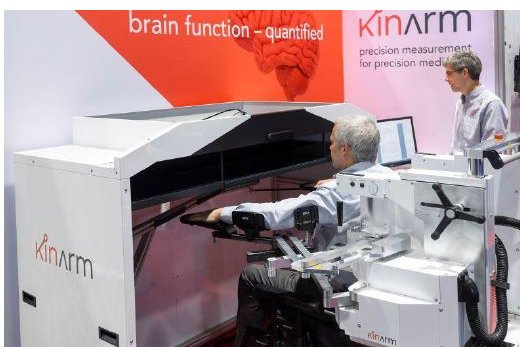
A researcher seated in a Kinarm robotic assessment lab.
Adopted
Roadmap being implemented by the CEO
01
The challenge

A good problem, and a hard one.

After two decades of building interactive robots for motor-control, cognitive and behavioural research, Kinarm’s technology had scaled and its community had scaled. Support demand was scaling even faster.

The trigger

Labs came back online

COVID-era lab closures created a backlog. As labs reopened in 2021, ticket volume climbed fast.

The limit

Support didn’t scale

The model was built on direct support relationships, with resolution stretched across time zones.

The vision

Kinarm Academy

Leadership wanted a learning and support destination, but needed to know who it was for first.

The real question
Not “build a help centre”, but who needs what, when, and what does self-serve actually look like for a highly specialised research tool?
02
Discovery

Listen to the data before listening to people.

I designed and owned a three-month research programme, and acted as a strategic partner to the CEO and project manager.

2.5 yrs

Support tickets

Freshdesk data from 2019 to mid-2021: who raised tickets, for what, and how often.

3

Groups surveyed

Operators, researchers and Kinarm’s own support staff, to validate tickets at scale.

💬

Interviews & focus groups

Customers and support staff, to understand workflow, confidence and context.

🔍

Heuristic evaluation

Training videos and support pages checked against UX heuristics.

Ticket insight
468
tickets projected for 2021, a 43% jump over 2020. That made the case for investing in self-serve instead of simply hiring more support staff.
Ticket insight
4.6
tickets expected per new customer. It became the team’s first-ever baseline for what “normal” looked like.
Ticket insight

Old customers quieter, total volume louder

Tickets from the top five long-standing customers were falling, while total volume rose sharply.

Pattern

Three products to fix first

Most recurring issues came from three products: CTP, Dex Bug and Dexterit-E. Any self-serve experience had to address these first.

80%
The survey insight

Users weren’t avoiding self-service. The materials were failing them.

80% wanted faster access to training resources. The problem wasn’t getting people to use the resources. It was their quality and findability.

67%
said onboarding new lab members was a recurring friction point
55%
had tried to find answers on their own before contacting support
Interviews & focus groups

Numbers tell you what. People tell you why.

Theme

Unclear terminology

Language barriers made tickets harder to triage and resolve, on both sides.

Theme

Time-zone lag

Back-and-forth stretched resolution far beyond what either side wanted.

Theme

Independence is a goal

Not just a convenience. Users wanted to be self-sufficient if the tools were there.

Theme

Training didn’t transfer

Videos didn’t become working knowledge when a real problem came up. Content needed to map to roles, not features.

03
Customer & support journey

Where the two sides diverge.

One canvas for the customer’s path through a problem and the support team’s path to solve it. The emotional curve dips into frustration in the middle, and every friction point becomes a design implication for the Academy.

AwarenessConcerned
TroubleshootFrustrated
ResearchOverwhelmed
SupportImpatient
ReinforceRelieved

As-is customer & support journey

Activities, customer challenges, support challenges and opportunities at each stage.

5 stages · 5 opportunities
04
Define · Target audiences

Not one “researcher”. Four.

Each audience had different needs, confidence and support expectations. Tap through them.

Profile 01

Basic Researcher Trainee

New to the system. Needs structured onboarding. Low confidence, high support dependency.

Online certification
Ticket tracking
A forum
Online chatbot

“The biggest challenge is knowing the correct terms to search for when troubleshooting.”

What gets in the way
  • Troubleshooting relies heavily on trial and error
  • Limited coding practice time in the online training format
  • No continuous training after initial exposure
  • Training assumes Stateflow/Simulink knowledge some trainees lack
  • Most frequent bugs: custom task programming, lab hardware, Dexterit-E
Profile 02

Lab Manager / Staff Operator

Responsible for onboarding others. Needs reusable training assets and administrative clarity.

Online certification
Online chatbot
A private forum

“A training validation in the form of certification will provide a standardised approach to persons who administer tasks.”

What gets in the way
  • Bugs arise mid-assessment and disrupt sessions with participants
  • Needs a streamlined way to report one-off troubleshooting issues
  • Limited knowledge on adjusting the robot for different participant sizes
  • Wants remote refresher training to reinforce Kinarm Camp learnings
  • COVID and staff turnover cut on-site training short
Profile 03

Clinical Researcher

A domain expert who needs depth and precision, with low tolerance for generic content.

Online chatbot
A forum
Online certification
Ability to track

“An online chatbot could be helpful!”

What gets in the way
  • Recurring exoskeleton errors cause crashes, trial miscounts or system failures
  • Needs better debugging capabilities and stronger troubleshooting tools
  • Training was slow, relying on self-learning without enough guidance
  • The pandemic limited hands-on, in-person support
Profile 04

General Researcher

Variable experience. Values a peer community and self-directed learning.

Community connection was underserved, and highly valued.

What this profile needs
  • Content they can explore at their own pace and level
  • Peers across labs to learn from, not only their own cohort
  • A way to contribute back once they’re proficient
Heuristic analysis

Great content can’t help if no one can find it.

Navigation

Duplicated navigation on the left and centre of the page, too many support pages and too much highlighted text.

Visual cues

The “Contact Support” and “Give us a call” icons looked like dropdowns but weren’t, and active items looked inactive.

Readability

Inconsistent spacing, small fonts in dense areas, low contrast, and walls of text with no images.

The support pages I audited.
05
The big call · your turn

Four audiences, one Academy. How do you design it?

The instinct in service design is to find the universal solution. Tap a card.

06
Service design recommendations

Borrow what already works.

Every lab runs its own internal onboarding, and in under two weeks a newcomer becomes an independent Kinarm user. It works because it’s guided, social and checked. The Academy had none of that by default.

🔒 The most detailed recommendations are confidential under NDA
01 · Join
WelcomeA path made for your role and experience
02 · Self-paced
LearnFindable, plain-language modules and glossary
03 · Ongoing
PracticeSandbox exercises and cross-lab peers
04 · Milestone
CertifyCheckpoints and visible skill badges
05 · Lifecycle
ContributeAnswers become community FAQs
↺ North star: make every Kinarm user self-sufficient faster, so the community keeps getting smarter
01

Role-based onboarding

Not one generic path. New users land on content for their context from day one, and lab managers get a parallel path to train their teams.

02 · The key move

Academy community

Content organised by audience and task, a community layer connecting experienced and newer users, and feedback that keeps the library current.

03

Navigation & findability

Surface the right content at the right moment, so users don’t need to know what to search for.

Baseline vs proposal

How labs onboard today, and the Academy experience that scales it.

07
Obstacles

The biggest obstacles, and how I overcame them.

The research was the easy part. Getting a business to see its problem differently took leadership.

01

The client thought it was a webpage problem

The ask was framed as interface fixes and a help centre.

How I overcame it

Reframed it with their own data

I led with ticket and survey evidence and chose which findings to elevate for executives. They aligned on the real problem: knowledge and community, not a webpage.

02

Support felt like a grievance

Customers came in frustrated, and support staff felt the strain from the other side.

How I overcame it

Facilitated for partnership

I deliberately brought customers and support staff into the conversation. The tone shifted from complaint to partnership, and both sides shared ideas to reduce CTP tickets, a rare moment of alignment.

03

A highly specialised domain

Neurorobotics, custom task programming and unclear terminology made problems hard to describe, even for experts.

How I overcame it

Immersed myself in the lab

I watched researchers use the robots in their own environment, then turned the terminology gap into a recommendation: a shared plain-language glossary.

04

No baseline for “normal”

The support team had no way to plan for or measure demand.

How I overcame it

Built one from 2.5 years of tickets

4.6 tickets per new customer became the benchmark the team now plans with, and the 43% projection made the cost of inaction concrete.

08
Key impacts

From a library to a learning system.

Flip the switch to see what changes for the learner.

Starting out
A library
A path for you
Finding answers
Hard
Ranked search
Who you learn with
Your lab only
Cross-lab peers
Support is
First resort
Safety net
Readiness
Invisible
Skill badges
Knowledge
Stuck in tickets
Community FAQs
Business case

The cost of inaction, made concrete

The 43% projection justified proactive investment in self-serve.

Architecture

A user-grounded blueprint

Four profiles gave the Academy build team real people to design for.

Onboarding

The highest-friction moment, addressed

The redesign targeted the pain point shared by all four profiles.

Roadmap

Being implemented

Kinarm is building the Academy on this foundation, prioritised across training materials, support process and support webpages.

09
Reflection

The data you already have tells a story.

Starting with tickets rather than interviews meant I arrived at user conversations with a grounded hypothesis, not an open question, which made the qualitative work sharper and faster. And early segmentation mattered: designing one surface for four different audiences would have meant designing well for none of them.

Anne Vivian-ScottPresident & CEO · Kinarm
CEO feedback

We had an exceptional experience working with Veronica. She directed a project to assess our customer’s user experience with our learning and support system. She was quick and insightful and provided us with actionable recommendations that we are now implementing.

She kept the project on track and always met her deliverable commitments.

I would highly recommend Veronica!

How did this land?

🤔Tell me more (opens LinkedIn in a new tab)

That’s a wrap. Let’s talk.

© 2025 Veronica Dogbegah · Product & Service Design Leader LinkedIn · Medium · YouTube · AI Pattern Library